
FreeClaim: Class Action Money
Qupid, LLCFinance
4.742.00 Reviews
- Version
- 1.4.4
- Installs
- 10.00K
- Age Rating
- Everyone
Screenshots
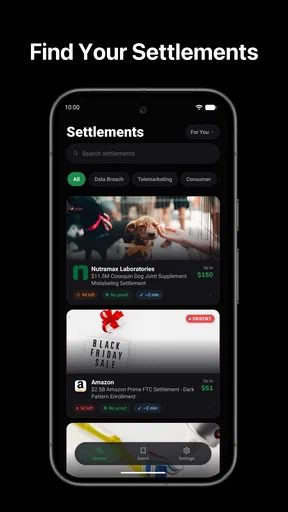
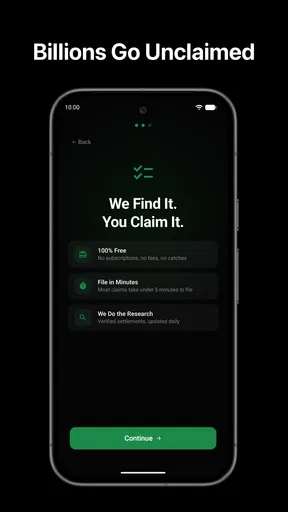
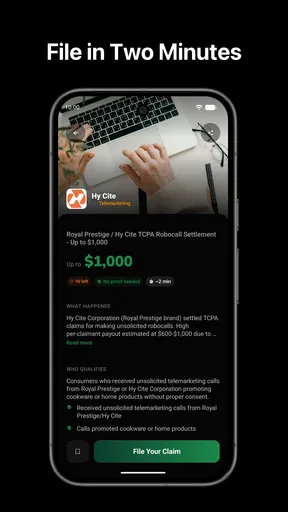
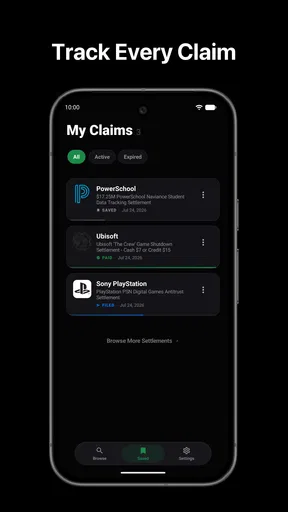
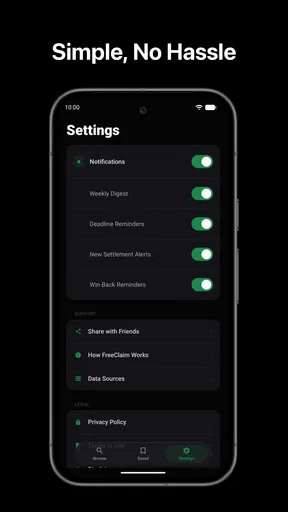
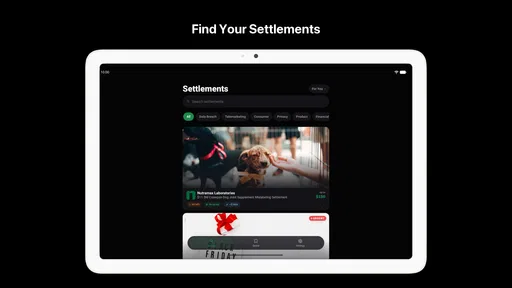
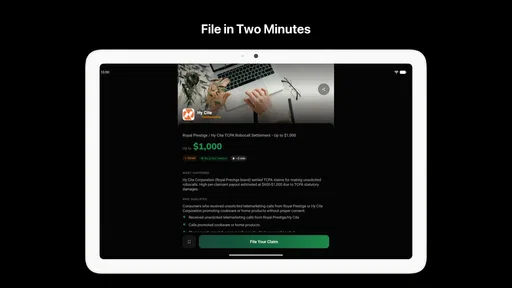
Our Review of FreeClaim: Class Action Money
 Analysis by Appyee
FreeClaim: Class Action Money caught my attention because it tackles a very specific financial chore: finding out whether I may be entitled to money from class action settlements, rebates, or refunds. That sounds simple, but these opportunities are easy to miss when they are scattered across notices, websites, emails, and ordinary consumer paperwork. I found the app most useful as a discovery and reminder tool rather than as a promise of instant cash. That distinction matters, because the app can help me locate a possible claim, while the actual result still depends on eligibility, deadlines, documentation, and the organization handling the settlement.
As a free finance app from Qupid, LLC, it is aimed at everyday users rather than professional legal researchers. The Everyone age rating also fits its purpose: the basic idea is understandable whether I am checking household purchases, subscriptions, products, or services. Its current version is 1.4.4, and the app has reached over ten thousand installs with a 4.7 average from around 980 ratings. Those figures suggest that the concept is landing well with users, although they do not change the practical question I care about most: will I still open it after the initial curiosity fades?
From first-week curiosity to a useful money habit
During the first week, the appeal is obvious. I can approach FreeClaim with a short, practical question: “Could I be owed something?” Instead of waiting to hear about a settlement by chance, I have a dedicated place to look. That is more convenient than searching the web with vague phrases such as “refund I might qualify for,” especially when I do not know the formal name of a case.
The best way to use it is not to scroll aimlessly. I would begin by making a private list of products, services, subscriptions, and purchases from the recent past. Then I would compare that list with the opportunities shown in the app. This turns the experience from casual browsing into a small audit of my own consumer history. It also reduces the chance that I will recognize a familiar brand, tap immediately, and forget to check whether the dates or purchase conditions actually fit.
That workflow is one of the app’s less obvious strengths. A settlement title can sound relevant while its eligibility rules are narrow. I found it smarter to treat each result as a lead, not as confirmed money. I would read the details carefully, note the deadline, and keep any required proof nearby before starting a claim. In practice, this makes FreeClaim more valuable for organized users than for people expecting a one-tap payout.
A realistic example would be a household member remembering that the family used a particular service several years ago. Rather than relying on memory alone, I would search old email receipts, bank statements, order histories, or account records, then compare what I find with the claim requirements. If the evidence is weak, I would avoid guessing. A claim made with inaccurate information can create more trouble than the small amount of time saved.
The first-week experience is also a good test of personal fit. If I regularly ignore refund notices, delete settlement emails, or lose track of purchase records, the app gives me a central starting point. If I already follow consumer-law newsletters, maintain detailed records, and search settlement databases routinely, the novelty is smaller. In that case, FreeClaim may still be convenient on a phone, but it is less likely to transform my routine.
What the app is good at—and what it cannot replace
I see FreeClaim as a finder, not a legal adviser, claims administrator, or personal finance manager. That boundary should shape expectations from the beginning. It can bring potential opportunities to my attention, but it cannot decide whether my situation satisfies every rule. It also cannot make an administrator approve a claim or guarantee that a settlement will pay the amount I imagine.
This is where it differs from the usual alternatives. A general search engine gives me a wider range of information but requires better search terms and more patience. Email alerts can be useful, yet they depend on notices reaching the right inbox and surviving spam filters. Dedicated legal or consumer websites may offer deeper explanations, while a budgeting app is better for tracking spending and recurring bills. FreeClaim occupies a narrower middle ground: it is more focused than ordinary search and less comprehensive than a research-oriented source.
That focus is valuable when I want a quick screening pass. It is less suitable when I need authoritative case documents, detailed legal interpretation, or a full record of every claim I have submitted. For those situations, I would use the app as an entry point and then verify the information through the official settlement materials. The important habit is to separate discovery from verification.
I would also avoid judging an opportunity by its headline amount. Settlement payments can depend on the number of valid claims, the available fund, proof requirements, and other conditions. Even when an app presents a result that looks promising, I would read the official instructions before deciding whether the time and paperwork are worthwhile.
Why the value can continue from month to month
The app’s recurring value comes from the fact that new opportunities can become relevant at different times. I may buy a product today and only learn much later that a settlement or rebate process exists. A periodic check therefore makes more sense than installing the app once, browsing everything, and removing it immediately. The value is not constant entertainment; it is the chance of catching something I would otherwise overlook.
My preferred monthly routine would be short and deliberate. I would open the app when reviewing household finances, scan for newly relevant listings, and compare them with purchases or services used since the previous check. I would then record only the items that deserve follow-up. This prevents the app from becoming another endless feed that I browse without taking action.
A second useful routine is to check after major spending periods. Moving home, changing a mobile or internet service, buying a vehicle, replacing appliances, or signing up for a long subscription can create a larger paper trail than ordinary weekly purchases. Those moments are good prompts to review possible rebates or refunds, because I am already looking through receipts and account records.
There is also a household angle. If several people share purchases or subscriptions, one person may remember the product while another has the receipt. I would keep a simple note identifying the item, the approximate purchase period, and where the proof is stored. That small preparation makes it easier to act when a matching opportunity appears. It also avoids the common mistake of opening a claim and discovering that the necessary information is scattered across several accounts.
Still, the month-to-month benefit is conditional. The app earns a permanent place only if I build it into a routine that takes very little effort. If I open it randomly, forget what I already checked, and never complete a claim, it becomes a source of unfinished tasks. The app cannot create recurring value by itself; I have to connect it with record keeping and a calendar habit.
The maintenance burden behind a “free” finance app
FreeClaim costs nothing to download, which removes the biggest barrier to trying it. But free does not mean frictionless. My time is still a cost, and the maintenance burden comes from reading eligibility rules, gathering evidence, entering accurate information, and remembering deadlines. For a small possible payment, that effort may not always be worthwhile.
I would handle the app with the same caution I use for any financial service. Before submitting personal details, I would inspect the claim destination and understand what information is being requested. I would avoid uploading documents casually, especially when a result is only loosely connected to something I purchased. The app’s purpose makes financial and consumer information relevant, but relevance does not mean I should provide more than a particular claim requires.
Accuracy is another maintenance issue. Old addresses, different email accounts, changed payment methods, and shared family purchases can make a claim harder to complete. Rather than entering a guess, I would pause and check my records. A short note in a password manager or secure document can help me remember which account, receipt, or order history supports a claim, without relying on memory the next time I revisit it.
Deadlines deserve special attention. Finding an opportunity is not the same as completing it on time. I would add a reminder as soon as I decide that a claim is worth pursuing, especially if I need to locate proof or ask another household member for information. This is a concrete way to make the app useful beyond the moment of discovery: the app identifies the lead, while my calendar protects it from being forgotten.
I also would not treat the app as a replacement for checking official communications. If I receive a direct notice about a settlement, rebate, or refund, I would compare it with what I see in FreeClaim and follow the most authoritative instructions available. That double-check takes a little longer, but it helps distinguish a genuine opportunity from an outdated or incomplete summary.
Where fatigue starts to appear
The main source of fatigue is the mismatch between browsing and receiving money. It is satisfying to find a possible match, but the next steps can be slower and less exciting. I may need to search old records, prove a purchase, read conditions, and wait through an administrative process. If several results require that level of work, the app can begin to feel like a list of chores rather than a financial shortcut.
Another fatigue point is relevance. A broad finder has to show opportunities that may apply to many people, but not every listing will match my buying history. Repeatedly seeing cases connected to products or services I never used can make the app feel less personal. I would manage that by filtering mentally and keeping my own purchase history as the reference point instead of trying to investigate every result.
There is also a psychological trap: small possible amounts can encourage overchecking. I would set a time limit for each review and skip anything that does not clearly relate to me. The goal is to recover overlooked money, not to spend an evening chasing every theoretical possibility. In my experience, a disciplined shortlist is more useful than an exhaustive search with no completed claims.
Users who want a full financial dashboard may also feel that the app is too narrow. It is not the tool I would choose for budgeting, monitoring investments, tracking bills, or planning debt payments. A finance app that covers those areas may deserve more frequent use because it supports daily decisions. FreeClaim has a different rhythm: occasional checks, careful follow-up, and patience.
That narrow purpose can actually be a benefit for people who dislike complicated finance software. I do not need to reorganize my entire budget to use it. I can open it for one task, investigate a relevant opportunity, and leave. The trade-off is that its usefulness depends heavily on whether there is a current match for my own history.
Who should keep it installed
I would recommend keeping FreeClaim installed if I tend to make many consumer purchases, manage several household accounts, or regularly miss administrative opportunities. It is especially practical for someone who wants a simple monthly check rather than a complex research process. The free price makes experimentation easy, and the Everyone rating means it is approachable for a broad household audience.
It can also suit people who are good at follow-through but not good at discovery. If I am willing to read instructions and collect documents once a relevant result appears, the app may solve the hardest part: helping me notice that an opportunity exists. Its role is strongest at the beginning of the process, where ordinary search habits often fail.
I would be more cautious about recommending it to someone who expects guaranteed returns, instant refunds, or a complete legal explanation for every case. That person may become frustrated quickly. I would also suggest a different primary tool for anyone seeking detailed financial management. A budgeting application, official consumer agency, or direct settlement source may be better depending on the question.
For privacy-conscious users, my advice is simple: use the app to identify possible matches, then take a moment to understand where the claim is completed and what information is necessary. Do not assume that every convenient path deserves every document. That careful approach adds a little friction but is appropriate for anything involving identity, purchases, or payment details.
Does it earn lasting space?
My long-term view is positive but measured. FreeClaim is not an app I would open every day, and that is not a weakness by itself. Its lasting value comes from occasional opportunities that are easy to miss, not from constant engagement. If I pair it with a monthly calendar reminder and a basic record of major purchases, it can justify staying on my phone without demanding much attention.
The app earns its place most clearly when it helps me notice a relevant claim and complete it with information I already have. It earns less space when I browse without a plan, investigate unrelated listings, or expect the app to handle verification for me. That makes the user’s workflow just as important as the app itself.
Qupid, LLC has taken a focused approach to a familiar financial frustration, and the strong 4.7 average from around 980 ratings indicates that the idea resonates. I would still judge it by completed, relevant discoveries rather than popularity. My recommendation is to try it free, create a sensible checking routine, and keep expectations realistic. FreeClaim: Class Action Money is worth keeping as a low-maintenance opportunity finder, not as a replacement for official claim information or everyday money management.
If I had to sum up the experience for a friend, I would say this: install it when you want help looking for overlooked settlements, rebates, and refunds, but give it a job description. Check it periodically, verify every promising result, protect your personal information, and move on when a claim is not worth the effort. Used that way, it has a reasonable chance of remaining useful after the first-week novelty disappears.
Verdict
Strengths of FreeClaim: Class Action Money
- Simple interface makes it easy to browse available class actions.
- Can help users discover settlements they may otherwise miss.
- Claim deadlines and eligibility details are presented in one place.
- Useful for tracking potential payouts from multiple settlements.
- Free to download and use for searching claim opportunities.
Limitations of FreeClaim: Class Action Money
- Eligibility varies widely, so many listed claims may not apply to you.
- Payout amounts are estimates and can change after review.
- Some claims require detailed documents or proof of purchase.
- Settlement availability may depend on your location and timing.
- Users should verify case details before sharing sensitive information.
Similar Picks in This Category
View All
Google Wallet
Google LLC4.3

Airtel: Recharge, Bank & Loans
Airtel4.0

PayPal - Pay, Send, Save
PayPal Mobile4.2

DANA Indonesia Digital Wallet
PT Espay Debit Indonesia Koe4.5

Binance: Buy Bitcoin & Crypto
Binance Inc.4.8

Cash App
Block, Inc.4.7
Frequently Asked Questions
What is FreeClaim: Class Action Money?
FreeClaim: Class Action Money is an app designed to help users discover potential class-action settlements and check whether they may qualify to receive compensation. It can organize available claims, explain basic eligibility requirements, and guide users through the submission process. The app is generally intended as an information and claim-assistance tool, not as a guarantee that every user will receive money from a settlement.
How does FreeClaim help me find class-action settlements?
After opening the app, users can browse settlement opportunities and review information such as the involved company, claim deadline, estimated eligibility conditions, and required documentation. The available listings may depend on location, personal circumstances, and the settlement administrator’s rules. I recommend reading each claim’s official notice carefully, because the app’s summary should be treated as a convenient overview rather than a replacement for the complete legal terms.
Is FreeClaim: Class Action Money free to use?
The app may be available to download without an upfront charge, but users should still review its current terms, privacy policy, and any in-app payment information before submitting claims. Class-action settlements typically have their own rules about compensation, and some services may operate under different fee arrangements. Never assume that an advertised settlement amount is guaranteed, since final payments can depend on the number of valid claims and the settlement agreement.
Is FreeClaim safe, and what personal information does it require?
Using a settlement-finding app can involve sharing sensitive details, including your name, email address, contact information, location, or documents proving eligibility. Before creating an account or submitting a claim, check the app’s privacy policy, developer information, permissions, and data-sharing practices. Avoid providing banking or identity information unless it is clearly required through a legitimate, secure claim process and you understand who will receive and store it.
Will FreeClaim guarantee that I receive class-action settlement money?
No app can guarantee that you will receive compensation from a class-action settlement. Eligibility must be determined according to the official settlement terms, and claims may be rejected if information is incomplete, submitted late, duplicated, or unsupported. Even approved claims may receive less than an advertised maximum amount because funds are divided among eligible participants. Always verify deadlines and final instructions before completing a submission.
